
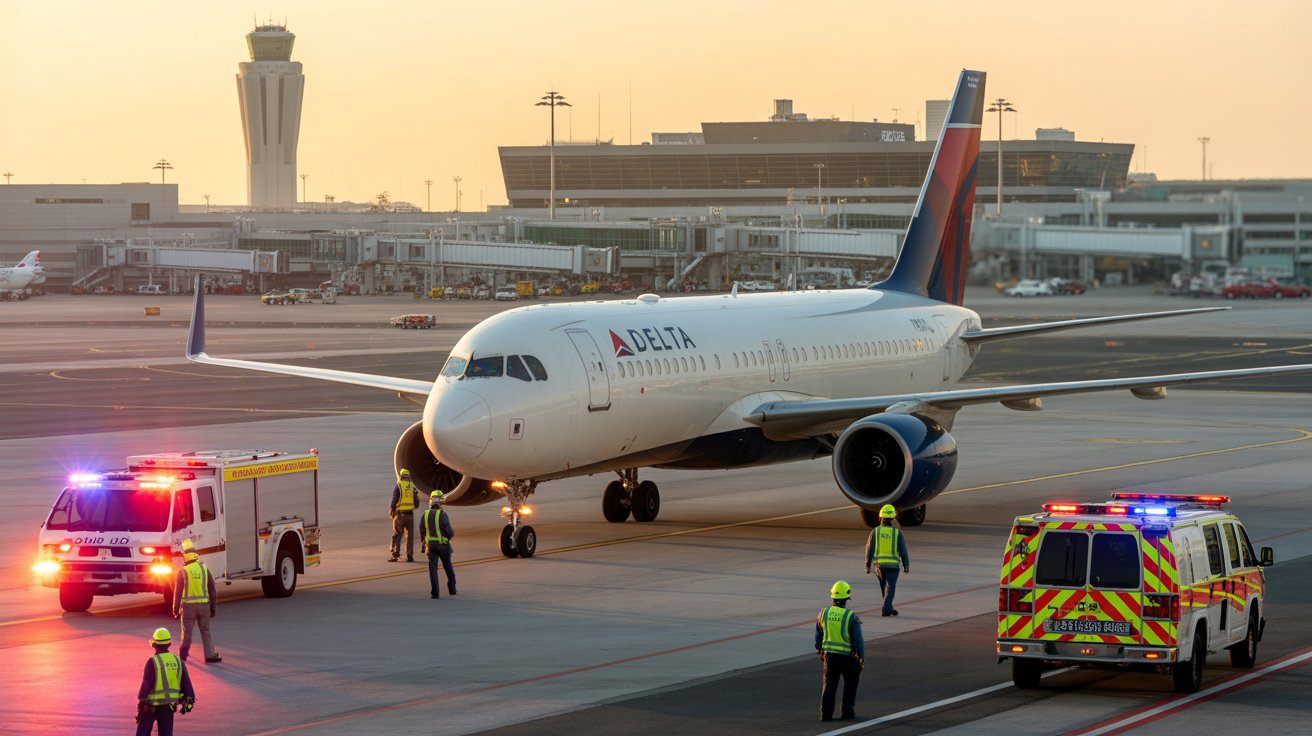
Aviation is a highly regulated and safety-driven industry where passenger well-being is prioritized above schedules or convenience. The recent event in which Delta Flight DL275 Diverted LAX highlights the importance of strict operational protocols and emergency preparedness. This article provides an in-depth overview of the incident, the causes behind the diversion, the procedures followed by the airline, and its impact on passengers and aviation operations.
Flight Background
Understanding the context of Delta Flight DL275 Diverted LAX begins with an overview of the flight, aircraft, and passenger profile.
Airline and Flight Number
- Airline: Delta Air Lines
- Flight Number: DL275
Delta Air Lines operates multiple long-haul flights daily, including transpacific services. Flight DL275 was a scheduled overnight flight connecting the American Midwest to East Asia.
Scheduled Route
| Flight Segment | Departure | Arrival | Flight Type |
| DL275 | Detroit Metropolitan Wayne County Airport (DTW) | Tokyo Haneda Airport (HND) | International, Long-Haul |
Aircraft Type of Delta Flight DL275 Diverted LAX
- Model: Airbus A350‑900
- Features: Wide-body, long-range, fuel-efficient, and equipped with advanced safety and navigation systems.
- Passenger Capacity: Approximately 250–300 across multiple cabin classes (Economy, Premium Economy, Business).
The aircraft’s modern technology allows for extended over-ocean flights, but like all complex systems, technical anomalies can occasionally occur.
Passenger and Crew Makeup of Delta Flight DL275 Diverted LAX
- Passengers: Around 250–300 travelers
- Crew: 15–20, including pilots and cabin staff trained for emergency situations
- Cabin Classes: Economy, Premium Economy, Business, and possibly First Class
The experienced crew ensured that passenger safety remained the top priority throughout the diversion.
Timeline of Events: How Delta Flight DL275 Diverted LAX
Departure and Initial Cruise
The flight departed from Detroit Metropolitan Wayne County Airport (DTW) as scheduled. Passengers were settle, and the aircraft was cruising over North America en route to the Pacific.
Detection of the Technical Issue
While flying over the Pacific Ocean, the pilots detected a malfunction in the engine anti-ice system, which prevents ice accumulation on critical engine components. Ice formation at high altitudes can reduce engine efficiency or even lead to engine failure, making the system critical for safe long-haul operations.
Delta Flight DL275 Diverted LAX to Divert
After assessing the warning, pilots initiated communication with Delta operations and air traffic control. Based on:
- Proximity to potential diversion airports
- Remaining fuel reserves
- Safety considerations over the open ocean
The decision was made to divert the flight to Los Angeles International Airport (LAX). This timely decision prevented potential risks and ensured passenger safety.
Diversion and Landing
The aircraft was safely reroute to LAX. Upon approach, air traffic control coordinated the landing, ensuring smooth descent and runway availability for this wide-body aircraft. Passengers disembarked safely, supported by ground staff for onward travel.
Cause of the Diversion
The primary cause behind Delta Flight DL275 Diverted LAX was a critical system anomaly:
- System Affected: Engine anti-ice system
- Risks if Ignored: Engine failure, loss of thrust, vibration issues
The pilots’ quick assessment and adherence to safety protocols ensured that no further risk developed during the flight.
Ground Handling and Aircraft Inspection of Delta Flight DL275 Diverted LAX
After landing, the aircraft underwent a thorough inspection and maintenance.
Maintenance Evaluation
- Detailed checks on the anti-ice system
- Verification of all engine systems
- Tests to ensure no collateral damage
Repairs and Clearance of Delta Flight DL275 Diverted LAX
- Necessary technical repairs were completed
- Post-repair tests confirmed system functionality
- Aircraft cleared for subsequent flights after safety confirmation
Crew Rest and Passenger Support
- Crew duty limits were observed, ensuring pilots rested before returning to operations
- Passengers received rebooking assistance, accommodation, and meal support
Passenger Impact on Delta Flight DL275 Diverted LAX
Immediate Effects
- Flight delays
- Missed connections
- Temporary stress and uncertainty
Airline Response
Delta Air Lines provided:
- Rebooking on alternate flights to Tokyo
- Accommodation and meals for affected passengers
- Continuous updates and support via airline staff
Aviation Safety and Protocols in Delta Flight DL275 Diverted LAX
Standard Diversion Procedures
When an in-flight anomaly occurs:
- Pilots assess the system issue immediately
- Determine the nearest suitable airport for diversion
- Communicate with airline operations and ATC
- Ensure passenger and crew safety remains the top priority
Monitoring Systems
Modern aircraft like the Airbus A350 are equipped with redundant monitoring systems to detect critical anomalies early. In the case of Delta Flight DL275 Diverted LAX, these systems provided pilots with accurate real-time data for decision-making.
Why LAX Was Chosen as the Diversion Airport
Several factors made LAX the ideal choice for diversion:
- Proximity to the flight’s location at the time of the anomaly
- Capability to handle wide-body aircraft
- Availability of technical and maintenance facilities
- Adequate passenger support and logistics
This ensured both immediate safety and operational efficiency.
Broader Context of Delta Flight DL275 Diverted LAX
Frequency of Diversions
Diversions are relatively common in aviation and occur due to technical, medical, or weather-related reasons. Airlines plan for contingencies to handle these scenarios smoothly.
Lessons Learned
- Importance of redundant systems in modern aircraft
- Necessity of crew training for emergency procedures
- Effectiveness of preemptive diversion decisions to maintain safety
Aftermath and Follow-Up of Delta Flight DL275 Diverted LAX
Flight Completion
- The remainder of DL275’s journey to Tokyo was rescheduled for later flights
- Aircraft returned to service only after a full inspection
Airline Statements
Delta emphasized its commitment to safety, stating that:
- Passenger well-being was prioritized
- Crew decisions adhered to standard aviation protocols
- The incident highlights the airline’s operational readiness
Conclusion
The case of Delta Flight DL275 Diverted LAX underscores the effectiveness of modern aviation safety protocols. From detecting a critical engine system anomaly to safely diverting across North America, the coordinated efforts of pilots, airline operations, and maintenance teams ensured passenger safety. While diversions may inconvenience travelers, they are an essential component of safe airline operations. This event serves as a strong reminder of why safety is always the top priority in commercial aviation.
FAQs About Delta Flight DL275 Diverted LAX
Why did Delta Flight DL275 divert to LAX?
Delta Flight DL275 was diverted to Los Angeles International Airport (LAX) due to a technical issue with the engine anti-ice system. This system prevents ice accumulation on engine components, which is critical for safe long-haul flights, especially over the Pacific Ocean.
Was the diversion a safety precaution?
Yes. The diversion was purely a safety precaution. Pilots are train to prioritize passenger and crew safety over schedule, and the anti-ice system anomaly required landing at the nearest suitable airport.
Were there any injuries during the diversion?
No. All passengers and crew were safe. The aircraft landed normally at LAX without any incidents or injuries.
What type of aircraft was operating Delta Flight DL275 Diverted LAX?
Delta Flight DL275 was operated using an Airbus A350‑900, a wide-body long-haul aircraft designed for efficiency, passenger comfort, and long transpacific flights.
How did the diversion affect passengers?
Passengers experienced:
- Flight delays
- Missed connections to Tokyo
- Temporary uncertainty
Delta provided support, including rebooking on alternate flights, accommodations, and meals.
Disclaimer:
The information provided in this article is intended for informational and educational purposes only. While every effort has been made to ensure accuracy, details regarding the diversion of Delta Flight DL275 Diverted LAX, including technical issues, timelines, and passenger experiences, are based on publicly reported information and aviation safety protocols.
The article does not constitute official statements from Delta Air Lines, airport authorities, or regulatory agencies. Flight operations, technical assessments, and passenger support procedures may vary, and readers are advised to consult official airline communications for confirmed updates.










Leave a Reply